

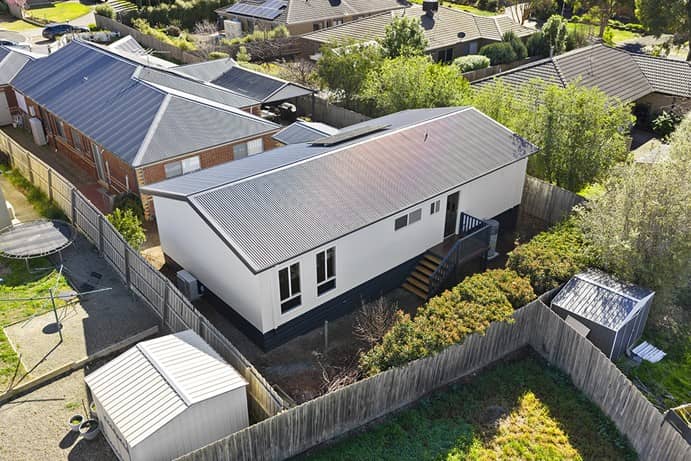
How to Make Sure Your Granny Flat Delivers Solid Rental Returns
 Superior Granny Flats Team
 August 11, 2025
 Thinking about adding a granny flat (aka a secondary dwelling) to your property and renting it out? You’re not alone.
With tight rental markets across Australia and several states streamlining approvals, more homeowners are asking whether a backyard build can pull its weight financially. Short answer: it can but like any investment, the numbers, rules and risks matter.
This guide breaks down the essentials, from approvals and costs to realistic returns, tax, and the gotchas people miss. It’s written for homeowners and investors weighing up a secondary dwelling for long-term rental income.
Why the Timing’s Favourable
Australia’s rental market remains tight. As of July 2025, the national vacancy rate was 1.2%, down from 1.3% a year earlier—well below the ~3% often considered “balanced.” Tight markets generally support leasing secondary dwellings quickly at solid rents (location still rules).
On the policy front, several states have made it easier to add a second dwelling or broadened who can rent them. These shifts reduce friction and make it easier to bring rental supply online.
Independent research has also pointed out the scale of potential: CoreLogic, Archistar and Blackfort identified 655,000 sites across Sydney, Melbourne and Brisbane that could suit granny flats—one signal of how this asset type can help both households and the broader market.
For a deeper dive into the financial side, check “Are Granny Flats a Good Investment? Factors to Consider”
What does it cost to build?
Costs vary with size, site conditions, finishes, and whether you’re going prefab or custom.
- A practical Australian range is $80,000–$200,000+ for many projects; complex, bespoke builds sit higher.
- Some builders quote $120,000–$250,000 as a common band for 1–2 bedroom dwellings, which aligns with recent market commentary.
Biggest cost drivers:
- Site works & access: sloping blocks, drainage, retaining, crane access.
- Services: new sewer connections, separate electrical metering, gas, NBN.
- Specs & size: 1-bed vs 2-bed; energy upgrades; decks; storage.
- Approval pathway: complying/fast-track vs full planning process (where required).
Tip: In Victoria, small second homes up to 60 m² often avoid a planning permit (still need a building permit), which can save time and soft costs—subject to overlays.
RELATED:
How Much Does It Cost to Build a Granny Flat in 2025?
How Much Do Backyard Pods Cost? An In-depth Analysis
How much rent could it earn?
There’s no one number rents hinge on suburb, amenities, transport, school zones, privacy, parking, and design.
To ballpark, look at 1–2 bedroom unit rents in your suburb and discount if your secondary dwelling is smaller or has fewer amenities; add a premium if it’s new, private and high-spec.
Context: capital-city unit rents and house rents have been elevated across 2024–2025, consistent with low vacancy rates. (For example, SQM’s weekly rent indices show strong levels in Melbourne and Brisbane through August 2025.)
Tax: What to Expect
If you rent out a secondary dwelling:
- The rental income is assessable.
- You can claim deductions for expenses that relate to earning that rental income (for example, letting fees, landlord insurance, interest on the portion of the loan used to build the secondary dwelling, repairs, and depreciation where eligible). Source: Australian Taxation Office
Main residence CGT: Using part of your home to produce income can reduce your main-residence capital gains tax exemption on sale. If the secondary dwelling sits on the same title as your PPOR and is rented to tenants, get advice on apportionment records early. (The “granny flat interest” CGT exemption introduced in 2021 relates to family care arrangements, not typical investment rentals.) Source: Australian Taxation Office
Tax rules are nuanced. Speak with a property-savvy accountant before you build or sign a lease.
Approvals & Compliance: key state notes
- Victoria: Small second homes up to 60 m² generally don’t need a planning permit where no special overlays apply; you do need a building permit, and you can’t subdivide or sell it separately.
- NSW: Many projects qualify for Complying Development if they meet SEPP standards (size, setbacks, private open space, landscaping, etc.). This can compress timeframes compared to a full DA.
- Queensland: State policy allows renting to unrelated parties; local planning schemes still control things like site cover, setbacks and parking check your LGA requirements.
- Western Australia: Up to 70 m² ancillary dwellings now have clearer pathways under revised R-Codes.
Regardless of state, you’ll need to satisfy building code (NCC) requirements, manage stormwater, and meet bushfire/flood controls where relevant.
Practical design choices that influence rent
- Privacy: Smart siting, fencing, and window placement reduce overlooking and noise conflicts—great for tenant demand and neighbour relations.
- Access & parking: Private walkway/drive, clear addressing, and safe lighting help.
- Storage & laundry: In-dwelling laundry and adequate storage lift appeal.
- Utilities: Separate electrical metering is common; consider separate water sub-metering to simplify billing (some states require it to on-charge).
- Energy: Higher star ratings and heat-pump hot water reduce running costs and can justify stronger rents.
Common risks (and how to de-risk)
- Over-capitalising
Spending $250k on a flat that earns only $350/week in a soft rental pocket won’t sing. Use suburbs’ unit rents as a guide, get three quotes, and run conservative scenarios. - Approval surprises
Flood, heritage, significant vegetation, or easements can change everything. Order a planning certificate / property information report early, and confirm services locations. - Neighbour issues
Overlooking and overshadowing complaints are avoidable through design. Keep setbacks and screening tight to the code from day one. - Financing constraints
Some lenders are conservative on end-value uplift. Work with a broker who routinely funds secondary dwellings and can pre-brief valuers on comparable rents. - Insurance gaps
You’ll likely need landlord insurance for the secondary dwelling plus to update your building policy. Check that your insurer recognises it as a compliant separate tenancy. - Management & wear-and-tear
Good property management pays for itself. Budget for turnover costs, periodic refreshes, and compliance (smoke alarms, gas/electrical checks where required). - Tax complexity
Keep meticulous cost records and floor-area calcs for CGT apportionment on sale if your primary home shares the title. An accountant can help structure this correctly.
Is a secondary dwelling a good investment for you? A 7-step filter
- Market fit: Vacancy rates and unit rents in your suburb support your target rent. (Start with reputable series like SQM’s rent and vacancy data.)
- Planning path: Your site meets your state’s streamlined rules (e.g., VIC small second home up to 60 m²; NSW complying development), with no overlay roadblocks.
- Feasible design: You can deliver a private, durable, low-maintenance layout tenants will love.
- Sound numbers: Net yield on build cost (not just gross) justifies the risk after conservative allowances for vacancy, maintenance and management.
- Finance ready: Your lender recognises rental income, and you can handle rate shocks.
- Tax clear: You understand income tax, GST (usually not applicable for residential rent), and CGT implications.
- Exit strategy: Even if policy changes or rents plateau, you’re comfortable with long-term hold or repurposing (home office, multigenerational living).
If you can tick those boxes, a secondary dwelling can be one of the highest-yield improvements you can make to a standard house and it’s adding real housing where it’s needed.
FAQs we’re often asked
Can I Airbnb it?
Short-stay rules vary by council/state, and some buildings/locations restrict it. Check your LGA’s short-stay regulations and owners corporation rules (if applicable) before banking on nightly rates.
Can I subdivide and sell it later?
Generally no if it’s approved as a secondary dwelling on the same title (e.g., Victoria’s small second homes can’t be separately sold). Subdivision is a separate process with its own standards and infrastructure contributions.
Will it add to my property’s value?
Often yes—through income and broader buyer appeal but uplift varies by market. Independent research has shown meaningful rent and value impacts from well-designed additional dwellings, though results are address-specific.
Do I need separate utilities?
Not always a legal must for electricity/water, but separate metering helps with clean billing and tenant expectations. Gas safety checks and smoke/CO alarms must meet local standards.
Get the Most of your Granny Flat with Superior Granny Flats
In the current Australian landscape, a well-planned, code-compliant secondary dwelling can be an excellent income play.
If you’re weighing up a granny flat for rental income, Superior Granny Flats can help you run the numbers, check your site against the latest rules, and sketch a design tenants will snap up.
Book a free chat with our friendly team today.
- Steel-Frame Kit Homes vs Timber-Frame Kit Homes: Which Should You Choose?
- How Granny Flats Can Help You Pay Off Your Mortgage Faster
- Common Mistakes to Avoid When Building a 2-Bedroom Granny Flat
- Rental Investment Guide: Granny Flats vs Pre-Built Homes VIC & QLD
- How to Make Your Granny Flat Stand Out in the Rental Market


Brands We Work With







for further information
 superiorgrannyflats


